

(This article was originally published on January 13, 2025 on my LinkedIn profile.)
Last week I mentioned how I use short prompts in generative AI tools to try and understand the biases embedded in the content the large language models were trained on.
I’ve been using Midjourney to create images fairly extensively for the past two years or so.
Aside from the tool’s difficulty rendering realistic hands (a limitation that is common among image generators), one of the most maddening limitations is its seeming inability to create realistic images of ordinary-looking people.
I don’t need every image to depict beautiful people. In fact, most of the time I need to create average-looking people, so it is a bias I frequently struggle with.
Let me demonstrate.
A Young Woman
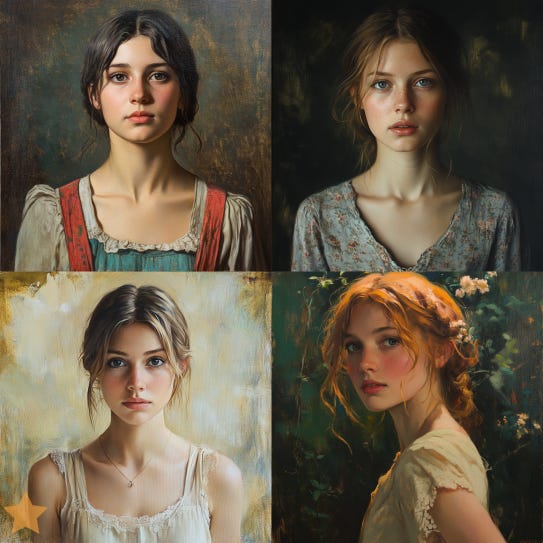
The only prompt I gave Midjourney was “a young woman” and, as you can see, all four of the images it generated are of pretty young women.
A Young Man
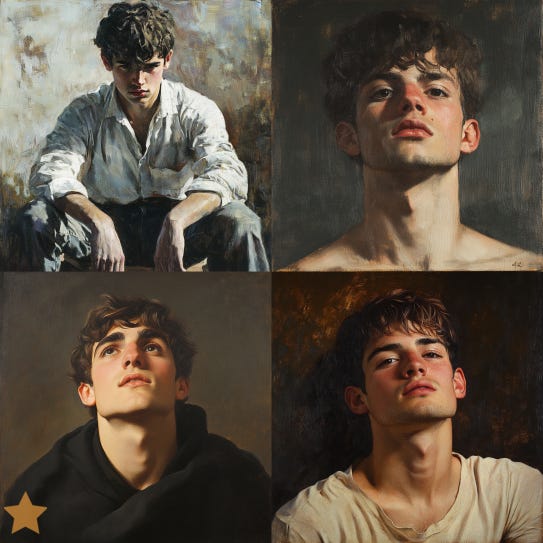
Likewise, all four of the images for the prompt “a young man” depict good-looking young guys. You’ve no-doubt noticed that all eight of these images are of white people.
An Ordinary-Looking Young Woman
Now let’s try and force Midjourney to tone down the beauty. This time, my prompt includes the phrase “ordinary-looking”:
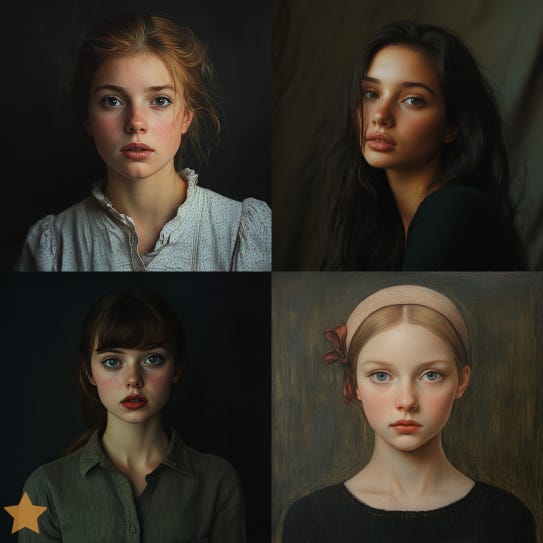
They all still look very pretty.
You will note that the use of “ordinary-looking” in the prompt produced one non-white woman. Still beautiful but is it a coincidence that the addition of that phrase generated a dark-skinned person?
An Ordinary-Looking Young Man
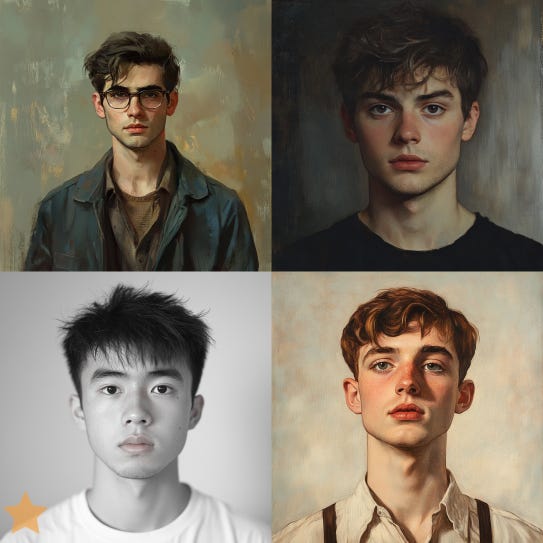
Again, all of them are very good-looking and, again, there is a non-white example amongst them. This is starting to feel like it’s not a coincidence.
An Ugly Young Woman
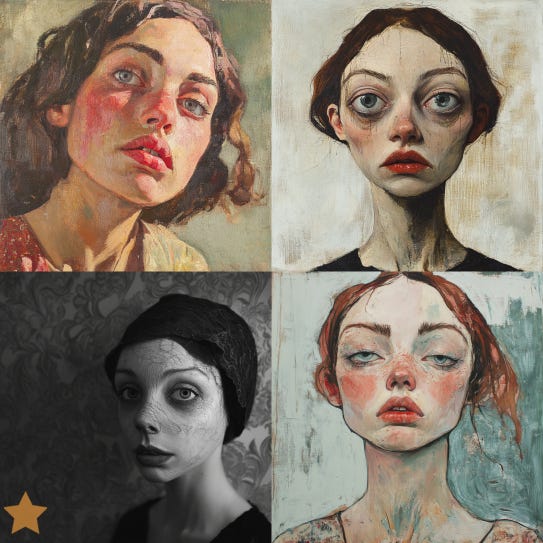
The addition of the word “ugly” prompted Midjourney to create woman with exaggerated features. And I wouldn’t call the image in the upper left-hand corner ugly.
An Ugly Young Man
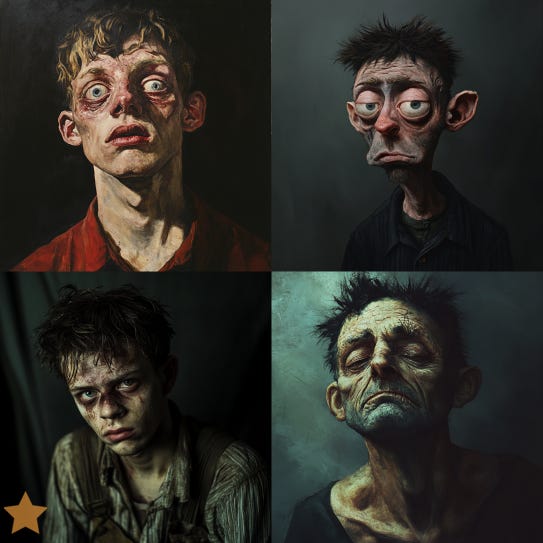
Midjourney responded my prompt to produce an ugly young man by just making them zombies...or caricatures.
A Beautiful Young Woman
Here’s what we get by explicitly telling Midjourney to create a beautiful young woman.
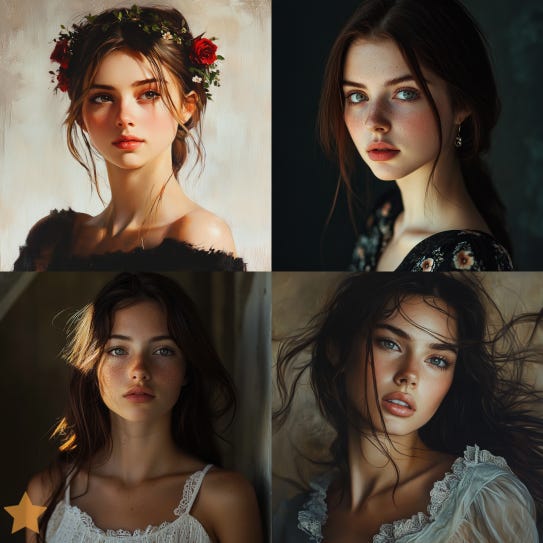
We return to an all-white cast of characters and one exhibiting a seductive expression.
A Beautiful Young Man
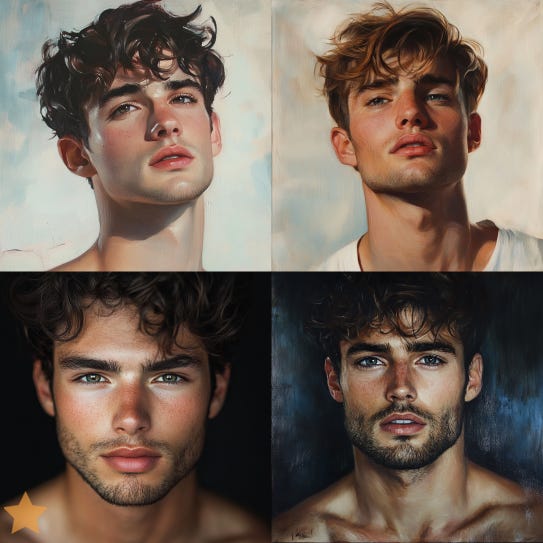
Four more white guys.
Embedded Bias
So what gives?
There are a few potential explanations.
Data Bias
The default to white people speaks volumes about the nature of the training data. You can create images of African Americans, Latinos, and Asians but if you don’t specify, you’ll get white people.
The data Midjourney was trained on likely included a disproportionate number of images of conventionally-beautiful white people, thus prioritizing those image features.
Think about the imagery of people that is publicly-available.
Media outlets are more likely than not to include images of beautiful people to accompany their content.
Social media influencers are by and large physically beautiful, so the images in their feeds are likely influencing Midjourney.
And perhaps the labelling of the training data included far more images labelled as beautiful compared to the number of images labelled ugly.